
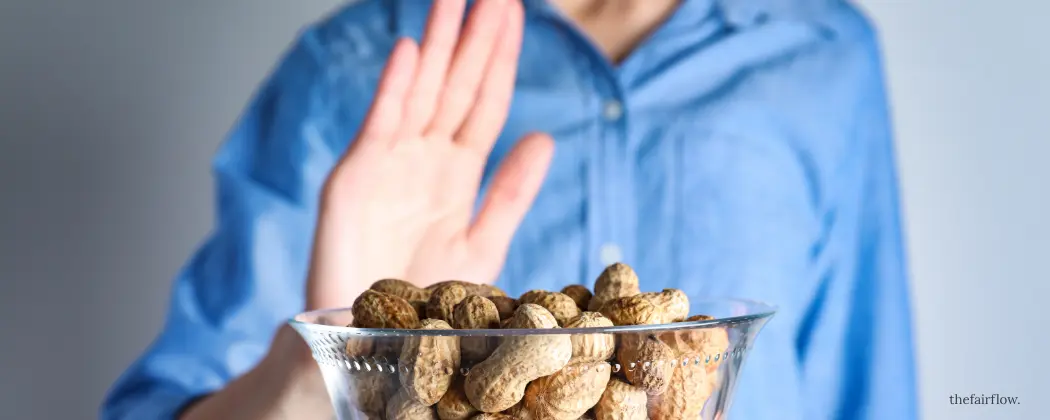
You grabbed a handful of peanuts at your desk today instead of reaching for the vending machine. Smart move, right? Or did you just blow your whole day?
If you’ve ever stood in your kitchen at 11 pm wondering whether that peanut butter spoon was a win or a setback, you’re not alone. Most nutrition advice out there is either too complicated or completely disconnected from the reality of your life: back-to-back meetings, kids to pick up, zero time management bandwidth left for anything that requires thinking.
Here’s the thing: peanuts are one of the most misunderstood foods in the wellness world. And once you understand what the research actually says, you’ll feel a whole lot better about that spoon.
Let’s break it down.
What the Science Actually Says About Peanuts
A landmark study published in the Journal of Food Science and Technology found that peanuts are packed with nutrients that directly support heart health, blood sugar regulation, and even weight management. We’re talking healthy monounsaturated fats, plant-based protein, fiber, magnesium, and B vitamins, all in one small handful.
But here’s what caught my attention: the study noted that people who regularly ate peanuts and tree nuts had a significantly lower risk of cardiovascular disease compared to those who didn’t eat them at all.
That’s not a minor footnote. That’s your afternoon snack pulling its weight.
The research also showed that despite being calorie-dense, peanut consumption was not associated with weight gain in most studies. In fact, the protein and fat combination in peanuts helps regulate appetite hormones, meaning you feel full faster and stay satisfied longer.
For someone eating lunch at her desk while answering emails, that matters a lot.
The Stress-Eating Connection Nobody Talks About
Here’s where it gets really interesting, and honestly, more relevant to your life than any generic nutrition chart.
When you’re stressed, your body releases cortisol. Cortisol does a very specific thing: it makes you crave high-fat, high-sugar, high-salt foods. It’s not a willpower problem. It’s biology.
What most people don’t know is that magnesium, found in peanuts, plays a direct role in regulating your body’s stress response. Low magnesium levels are linked to higher cortisol levels and increased anxiety. Most women, especially those running on fumes, are deficient in magnesium without ever knowing it.
So when you reach for peanuts during a stressful afternoon, your body might actually be asking for exactly what it needs.
This is the difference between eating with awareness and eating on autopilot. One small shift in how you think about food, rooted in what your body is actually signaling, can change everything.
The Real Problem: It's Never Just About the Peanuts
Let’s be honest for a second.
The reason you’re Googling “are peanuts good for you” at 10 pm isn’t because you need a nutrition lecture. It’s because you’re tired of second-guessing every food choice. You’re tired of diets that require a spreadsheet and a meal prep Sunday that never happens. You’re tired of doing everything right and still feeling like your body is working against you.
Sound familiar?
Here’s what I want you to hear: the problem isn’t the peanuts. The problem is the pattern.
When stress is high and time is low, food becomes a quick fix for feelings that have nothing to do with hunger. That’s not weakness. That’s a very human response to an unsustainable pace. Understanding that pattern is the first step to actually changing it, without giving up peanut butter.
How to Make Peanuts Work for You (Not Against You)
Now for the practical part, because knowing something is good for you means nothing if you can’t actually use it.
1. Use peanuts as a stress buffer, not a stress response
There’s a difference between grabbing a handful of peanuts because you planned it as your 3 pm snack and grabbing the entire jar after a brutal meeting because you need to feel something.
The first one is nourishment. The second one is coping.
Both are understandable. But only one leaves you feeling good an hour later.
Start small: put a pre-portioned bag of peanuts in your desk drawer before the week starts. When 3 pm hits and the emails are piling up, you already have a decision made. No willpower required. That’s not just smart nutrition. That’s cognitive behavioral strategy in real life.
2. Pair peanuts with something that slows you down
Eating at your keyboard while multitasking is one of the most common reasons smart women overconsume without realizing it. Your brain doesn’t register satisfaction the same way when it’s distracted.
Try this: next time you eat peanuts or anything else as a snack, step away from the screen for two minutes. Even just that. You’ll eat less, enjoy it more, and actually feel the satisfaction that your body is trying to register.
3. Watch what you pair them with
Plain peanuts or natural peanut butter with a banana or apple? Fantastic. Peanut butter cookies, peanut butter cups, or “peanut butter flavored” anything with a ten-ingredient label? That’s a different food category wearing a peanut costume.
Read the label. If the first ingredient is sugar or if it contains partially hydrogenated oils, put it back. The real thing is simple: peanuts, maybe salt, done.
Time Management for Your Plate: The Two-Minute Rule
One of the biggest reasons healthy eating falls apart for busy women isn’t motivation. It’s friction.
When your day is already maxed out, any food decision that requires more than two minutes of thought is a decision that probably won’t happen. So stop trying to overhaul everything at once.
Here’s the two-minute rule for eating better without adding to your to-do list:
- Keep peanuts or natural peanut butter visible and accessible. What’s easy to grab is what you’ll eat.
- Pre-decide your afternoon snack the night before. Write it down, put it in your bag, done.
- When you feel the urge to eat something you’ll regret, give yourself exactly two minutes. Set a timer. Drink water. Walk to the window. Most cravings, especially stress-driven ones, peak and pass in under three minutes.
This isn’t about being perfect. It’s about lowering the activation energy for better choices so they happen naturally, even on your hardest days.
What About Peanut Butter Specifically?
Let’s clear this up because it comes up constantly.
Yes, peanut butter counts. No, it is not the same as eating a Reese’s.
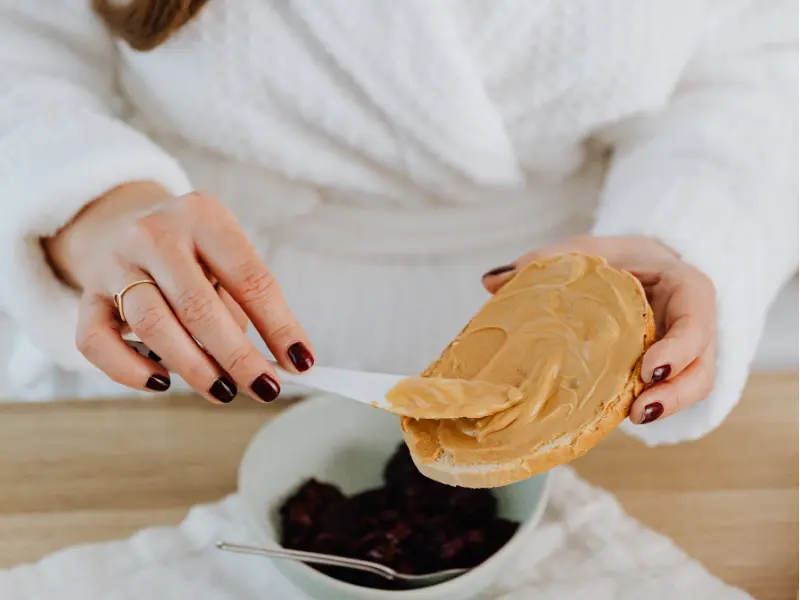
Natural peanut butter, the kind where the oil separates and you have to stir it, is nutritionally very close to whole peanuts. Two tablespoons give you about 8 grams of protein, 2 grams of fiber, and a solid dose of healthy fats. It keeps you full, stabilizes blood sugar, and takes approximately four seconds to put on an apple or a rice cake.
For someone who has no time to cook a real breakfast before the morning rush, a tablespoon of peanut butter on whole grain toast is not a failure. It is actually a solid, research-backed choice.
The version to avoid is the commercial kind with added sugar, hydrogenated oils, and a laundry list of preservatives. Check the ingredient list. Two ingredients: peanuts, salt. That’s it.
The Bottom Line
Peanuts are genuinely good for you. Not in a “well, everything in moderation” non-answer kind of way. Actually, measurably, research-backed good for you.
They support heart health, help regulate appetite, provide stress-busting magnesium, and deliver real protein that keeps you going through a long afternoon. For a woman running hard every single day, that’s not nothing. That’s a small but real advantage.
But more than the peanuts themselves, I want you to take away this: eating well when your life is full doesn’t require a complete overhaul. It requires understanding your patterns, lowering friction, and making one better choice at a time.
You don’t have to earn your food. You don’t have to punish yourself for the hard days. You just have to start paying a little more attention to what your body is actually asking for, and most of the time, it’s asking for something real.
If this hit home, share it with a friend who needs to hear it. You probably know someone who is also eating lunch at her desk and wondering if she’s doing it all wrong. Send this her way.
References
Peanuts as functional food: a review, 2015. Shalini S Arya et al.