
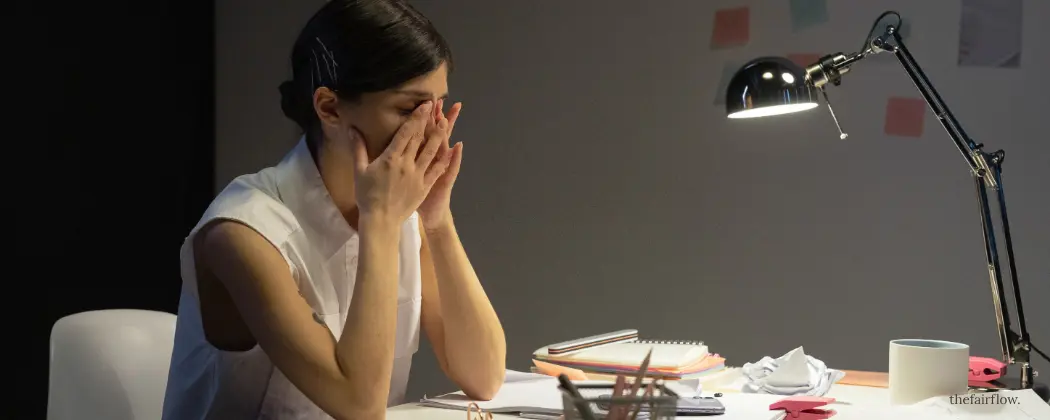
If you’ve been running on empty, smiling through every meeting, every family dinner, every “quick favor” someone needs from you, then learning how to recharge from social burnout might be the most useful thing you read this week. Not because it’s a trendy wellness topic. Because you’re likely already paying the price of ignoring it, and it’s showing up in ways you probably haven’t connected yet.
The Common Belief (And Why It's Keeping You Stuck)

Most advice tells you to “just take a break.” Schedule a spa day. Say no more often. Rest.
And sure, that sounds nice. But when you’re the person holding everything together at work, at home, and in every relationship in between, “just rest” feels about as realistic as “just win the lottery.”
Here’s what’s actually true: social burnout isn’t fixed by one long nap or a weekend away. It’s a signal from your nervous system that your energy has been flowing out for too long without anything coming back in. And until you understand why that happens and how to interrupt the cycle, the exhaustion keeps returning.
Research on stress, energy protection, and social recovery consistently points to three core truths: your social battery is finite and needs active protection, stress gets physically stored in your body and has to be released, and you can build real game plans for handling social demands without crashing afterward. What follows is built on those foundations, shaped for women who are already doing the most and need something that actually fits their real life.
What Social Burnout Actually Is (Not What You Think)
Social burnout isn’t introversion. It’s not shyness. It’s not being antisocial or difficult.
It’s what happens when you spend so much energy managing other people’s emotions, needs, and expectations that you have nothing left for yourself. And if you’re the one at work who keeps the team calm, the one at home who remembers every appointment and birthday and grocery list, the one who’s somehow expected to be emotionally available 24/7, then you already know this feeling.
Your body starts sending signals. You feel irritated after conversations that used to feel fine. You dread your phone. You eat when you’re not hungry, usually something quick and comforting, because your brain is looking for relief from the social weight you’re carrying. You cancel plans and feel relief, then guilt, then more relief.
That pattern makes sense. It’s not a character flaw. It’s your system trying to protect you.
The problem is that the relief is temporary. The weight comes back. And if you don’t have a real strategy for actually recharging, the cycle just keeps spinning.
Step 1: Stop Waiting for a Big Block of Time
The biggest mistake most busy women make when trying to recharge from social burnout is waiting for a “real” break. A full weekend. A vacation. A quiet house.
That moment rarely comes. And waiting for it means you’re running on a deficit for months at a time.
What actually works is micro-recovery. Small, intentional moments scattered through your day that signal to your nervous system: we’re safe, we can rest.
This might look like five minutes in your car before you go inside after work. A short walk without headphones. Eating lunch away from your desk without looking at your phone. These aren’t luxuries. They’re maintenance.
Think of it like charging your phone in short bursts instead of waiting for it to die completely. Your body works the same way. Even a partial charge helps.
The reason this matters for social burnout specifically is that your brain needs regular “off” time from social processing. Every interaction, even positive ones, requires your brain to track tone, read expressions, manage responses, and regulate your own emotions at the same time. That’s a lot. Giving your brain even small windows where it doesn’t have to do any of that is genuinely restorative.
Step 2: How to Recharge from Social Burnout by Moving the Stress Out of Your Body
This is likely the most important thing in this entire post, so stay with me.
Stress isn’t just a feeling. It’s a biological cycle that’s meant to have a beginning, middle, and end. The problem is that modern life interrupts the ending. You have a hard conversation at work, you hold it together, you move to the next thing, and the stress just sits in your body, unresolved.
Over time, that accumulation is what makes social interaction feel unbearable. It’s not really the interaction itself. It’s the pile of unfinished stress sitting underneath it.
So what actually completes the cycle? Movement is one of the fastest ways. Not a hardcore workout, just physical activity that gives your body permission to discharge what it’s holding. A 20-minute walk. Stretching. Dancing in your kitchen for three songs. It sounds too simple, but the research behind it is solid.
Breath also works. Slow, extended exhales specifically tell your nervous system it can calm down. Try breathing in for four counts and out for eight. Do that for two minutes. It likely won’t solve everything, but it’ll take the edge off in a way that actually reaches the physical level of stress, not just the mental one.
Physical contact matters too, things like hugging someone for 20 seconds, cuddling a pet, or even wrapping yourself in a weighted blanket. These activate your body’s calming response in a real, measurable way.
The point is: you can’t think your way out of social burnout. You have to move through it, physically.
Step 3: Get Strategic About Your Social Energy
Not all social interaction costs the same amount of energy. Some people and situations drain you fast. Others are actually restorative. Knowing the difference is a game-changer.
Take a moment to honestly categorize the social demands in your week. Which ones leave you feeling lighter? Which ones leave you needing to sit in silence for an hour afterward?
This isn’t about cutting people off. It’s about being honest with yourself so you can plan accordingly. If you know Tuesday night family dinner always wipes you out, don’t schedule anything emotionally demanding for Wednesday morning. If you know your best friend actually refuels you, protect that time instead of always canceling it when life gets busy.
Spending your social energy wisely is a skill, not selfishness. You only have so many units of social energy in a day, and being intentional about where they go changes everything.
One practical way to do this: before you commit to something, ask yourself, “Will I be glad I went, or will I need to recover from this?” That single question can save you a lot of unnecessary depletion.
You can also create what I think of as social “buffers.” These are simple rituals before and after social events that help you transition. Before a draining event, take ten quiet minutes to yourself. After, give yourself permission to decompress without immediately jumping into the next task. These buffers don’t require a lot of time, but they make a measurable difference in how quickly you recover.
Step 4: The Mental Reset Nobody Talks About Enough
Recharging from social burnout isn’t only about what you do with your body. It’s also about what you do with your thoughts.
When you’re socially burned out, your brain tends to replay interactions. Did I say the wrong thing? Was I too much? Should I have handled that differently? This mental replay keeps your nervous system in a low-grade stress response long after the actual interaction is over.
One of the most useful things you can do is create a deliberate end to your social day. This can be as simple as writing down three things you’re releasing from today, interactions you’re done mentally chewing on. You’re not pretending they didn’t happen. You’re giving your brain a clear signal that the processing is over.
Another thing that helps: noticing the story you’re telling yourself about needing time alone. A lot of high-achieving women feel guilty for wanting space. They interpret their need to recharge as weakness or as letting people down. That guilt actually makes the burnout worse, because even your rest time is shadowed by self-criticism.
Wanting to recover isn’t selfish. It’s what allows you to keep showing up. Framing it that way, as preparation for continuing to be present, not withdrawal from your responsibilities, tends to make it easier to actually do.
What Sustainable Recovery Actually Looks Like
There’s no one-time fix for social burnout, especially when you’re living a full, demanding life with real people counting on you.
What works is building small practices into the fabric of your ordinary days. Micro-recovery moments. Physical stress release. Smarter energy management. A gentler mental narrative about your own needs.
None of these are dramatic. None require a sabbatical or a complete life overhaul. They’re small enough to start today and consistent enough to actually shift how you feel over time.
The goal isn’t to become someone who never gets socially tired. The goal is to stop letting the exhaustion pile up until you crash, and to build a real, sustainable way to recover that fits the life you actually have.
A Quick Recap
Social burnout is your nervous system’s response to too much output and not enough recovery time.
To genuinely recharge from social burnout, start with micro-recovery moments throughout your day instead of waiting for a big break. Move your body to physically complete the stress cycle your brain can’t finish on its own. Get honest about which social demands drain you most and build simple buffers around them. And work on the mental side too, because the replaying and the guilt keep you stuck even when you’re technically resting.
You’ve been managing a lot for a long time. It makes sense that you’re tired. And it’s possible to feel genuinely better without burning everything down to do it.
Start with one thing from this list this week. Just one. See what shifts.
References
Burnout and the Stress Cycle: Emotional Labor and Its Effects on Women, 1983 Hochschild, A. R. (1983).
The impact of stress on body function: A review, 2017. Habib Yaribeygi et al.
Stress effects on the body, 2024. American Psychological Association.
Effects of physical exercise on anxiety, depression, and sensitivity to stress: a unifying theory, 2001. P Salmon