

You walk through your front door after another packed day. The to-do list in your head is still running. Your shoulders are somewhere up near your ears. And instead of feeling that deep exhale you crave, you feel the pile of mail glaring at you from the counter. If you’re one of the women quietly “doing it all,” your home might be adding to your stress instead of easing it. This post is about turning that space into a sanctuary, one that actually holds you up on your hardest days.
Here’s what most of us believe: stress relief comes down to mindset and habits. Just breathe more. Meditate. Add one healthy swap. And sure, those things help. But it appears there’s a bigger piece hiding in plain sight.
Researchers at the University Medical Center Hamburg-Eppendorf studied nearly 9,000 people to see what was really driving their anxiety. Their findings surprised even them. How people felt about their home environment- things like safety, brightness, noise, and the view out the window- explained more about their anxiety levels than lifestyle factors like exercise or smoking. Read that again. Your space might be shaping your stress more than your gym routine.
So if you’ve been white-knuckling your way through with willpower alone, no wonder it feels exhausting. You’ve been fighting the visible battle while ignoring the room you’re standing in. Let’s fix that. I’ll walk you through three simple steps to build a real sanctuary, no renovation, no big budget, and no extra hours you don’t have.
Step 1: Silence the Visual Noise
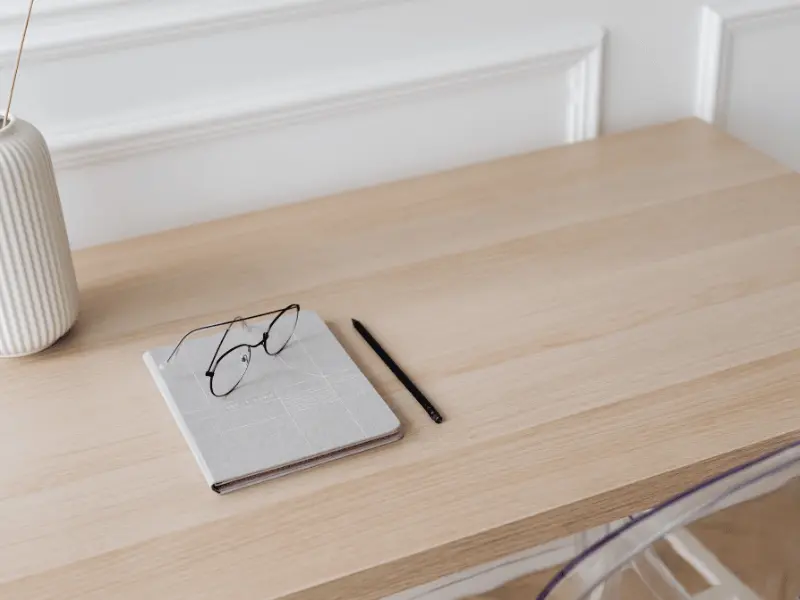
Clutter isn’t just messy. It’s loud. Every stray pile, every counter covered in “I’ll deal with it later,” sends a small signal to your brain that something is unfinished. And when your brain reads unfinished, it reads threat. That low hum of pressure keeps your stress hormones simmering, even when you’re technically resting.
Here’s why this matters for you specifically. When cortisol stays elevated, your body starts craving quick comfort. That’s often when you find yourself standing at the pantry at 3 PM, reaching for something salty or sweet, not because you’re hungry but because you’re wired and worn down. The mess feeds the stress, and the stress feeds the snacking.
So what do you actually do? You don’t overhaul the whole house. That’s a trap, and you don’t have the time anyway. Instead, pick one surface. Just one. Your nightstand, the kitchen island, or the corner of your desk. Keep that single spot completely clear and let it stay that way. When your eyes need somewhere calm to land, they’ll find it there.
It’s a tiny anchor of order in a busy room. And it works because your brain doesn’t need the whole space to feel peaceful. It just needs proof that peace is possible.
Now, clearing the clutter is a strong first move. But if you stop there, you’ll miss the piece that does the heavy lifting for your nervous system.
Step 2: Engineer Your Sensory Sanctuary
Your body is constantly scanning your surroundings, asking one quiet question: Am I safe here? You don’t do this on purpose. It’s automatic. And the answer your environment gives back changes everything about how you feel.
Remember that Hamburg study? Two findings stood out. People who felt their home was safe reported noticeably lower anxiety. And people in brighter spaces, with good natural light, felt calmer too. Noise, on the other hand, pushed anxiety up. These weren’t small effects tucked in the footnotes. Safety and brightness were among the strongest links they found.
So let’s use that. You’re going to send your nervous system some gentle “you’re safe” signals, one sense at a time.
Light it up. Open the blinds first thing in the morning and let real daylight hit your face for a few minutes. If your space is dim, add a warm lamp in the corner you use most. Brightness tells your body the coast is clear.
Turn down the noise. Constant background sound keeps your system on alert, even if you’ve stopped noticing it. Try softening it. Put on low instrumental music, run a small fan for steady white noise, or simply close a window against the street. You’d be surprised how much lighter a quiet room feels.
Add a soothing scent. Smell reaches the emotional part of your brain faster than almost anything else. Light a soy candle, dab on some lavender, or peel an orange while you unwind. One small scent can flip a room from tense to tender.
Build in a sense of security. This might mean a cozy chair angled so you can see the door, a soft blanket within reach, or simply a corner that feels like yours. Small cues of safety settle the body in a way no pep talk can.
Here’s the beautiful part. When your body finally registers safe, it stops reaching for outside comfort. The 3 PM pantry raid loses its grip because you’re no longer running on fumes and stress. You’re regulated. Calm. And calm doesn’t need a snack to survive the afternoon.
This step matters most because it works underneath your willpower, not against it. You’re not forcing yourself to relax. You’re building a space that relaxes you.
Now, none of this helps if it falls apart by Thursday. So let’s make sure it lasts.
Step 3: Make It Stick Without the Effort
Here’s the honest truth. You will not keep up anything that demands more energy than you have. And you’re already stretched thin. So the goal isn’t more effort. It’s less friction.
Big changes fail because they’re big. Tiny changes stick because they’re easy to repeat, even on your worst days. So we’re going small on purpose.
Try habit stacking. Attach one new calming action to something you already do. When you pour your morning coffee, open the blinds. When you set down your bag at night, clear your one surface. You’re not adding tasks. You’re borrowing routines you already have.
And please, drop the pressure to make it perfect. Some days your sanctuary will be one clean corner and a lit candle. That counts. A space that supports you doesn’t have to look like a magazine. It just has to feel like relief.
I suspect the reason so many wellness plans collapse is that they’re built for a life you don’t actually live. This one bends to fit yours. Sustainable beats impressive every single time.
Your Space, Your Sanctuary
You started this post carrying too much, walking into rooms that drained you instead of restoring you. Now you have three real steps to change that. First, silence the visual noise by keeping one surface clear. Second, engineer your senses with light, sound, scent, and small cues of safety so your body finally hears you’re safe. And third, keep it sustainable with tiny shifts that survive a busy week.
The research backs this up. Your environment isn’t background noise in your well-being. It might be one of the loudest voices in the room. When you care for your space, your stress eases, your cravings soften, and you stop running on empty.
You’ve spent so long holding everything together for everyone else. This is you, finally building a place that holds you. You deserve a space that feels safe, soft, and supportive of the woman you’re becoming.
Start with one surface. Open one set of blinds. Light one candle. Your sanctuary is waiting, and it’s closer than you think.
References
My home—my castle? Self-reported anxiety varies in relation to the subjective evaluation of home environment, 2024. Sandra Weber et al.
American Psychological Association. Stress effects on the body.
Reviewing the effectiveness of music interventions in treating depression, 2017. D. Leubner, T. Hinterberger